Foundational vs Advanced Makeup Course: Which One Should You Join First?
If you want to become a professional makeup artist, the first question you’ll be asked is: Do I do a basic make up course or jump to a professional make up course?
The answer depends on your present skill level, career goals, and experience with makeup. Both courses are designed to help you build a career in the beauty industry, but they serve different purposes.
In this guide, we’ll explore the distinctions between foundational and advanced makeup courses, who should opt for each one, and how to choose the ideal path.
What is a Foundational Makeup Course?
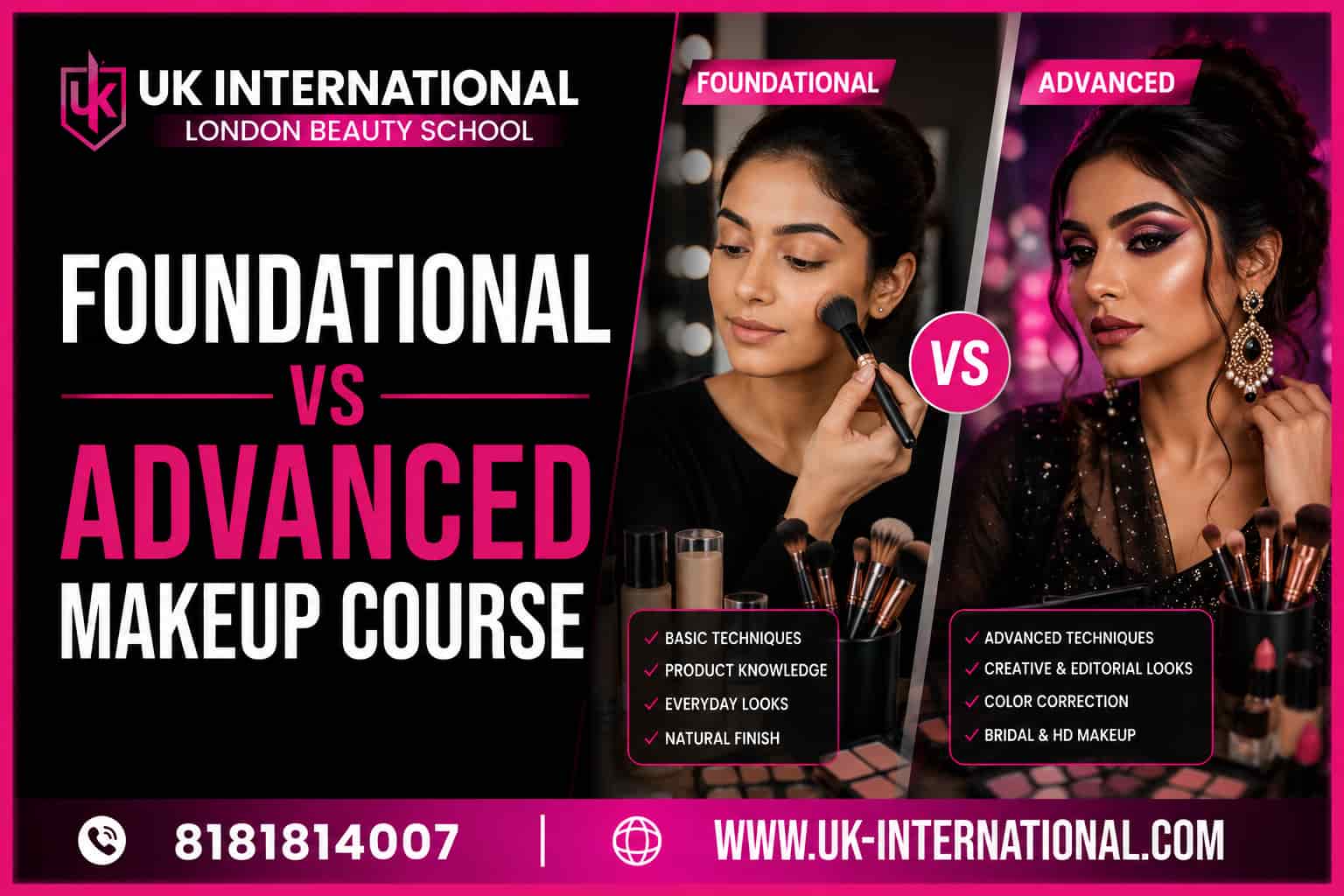
A foundational makeup course focuses on teaching students the A-to-Zs of makeup. Instead of just the process of application, the study delves into the science, techniques and hygienic practices of makeup design. Typically, a foundational course covers:
- Skin types and skin preparation
- Face shapes and facial analysis
- Color theory
- Product knowledge
- Brush selection and maintenance
- Foundation matching
- Concealing and correcting
- Eye makeup basics
- Lip techniques
- Eyebrow shaping
- Day and evening makeup
- Professional hygiene and sanitation
By the end of the course, students gain the confidence to create clean, balanced makeup looks while understanding why each technique works.
What Is an Advanced Makeup Course?
An advanced makeup training or advanced makeup courses are classes intended for learners who have already learned the beginner level makeup application techniques and now intend to focus on professional makeup artistry. Unlike a beginner class, instead of rehashing or redefining the basic and rudimentary techniques in an advanced makeup class, it is more about the high-level and career-level applications that successful makeup artist and professionals practice.
What to expect?
In an advanced makeup class curriculum, students usually cover the following techniques:
- HD makeup
- Airbrush makeup
- Bridal makeup
- Editorial and fashion makeup
- Celebrity-inspired looks
- Corrective makeup
- Mature skin makeup
- Special Effects (SFX) makeup
- Creative and runway makeup
- Portfolio creation
- Live model practice
Many advanced programs also include client handling, consultation skills, photography tips, and portfolio development to prepare students for real-world work.
Foundational vs Advanced Makeup Course: Key Differences
| Feature | Foundational Makeup Course | Advanced Makeup Course |
| Best for | Complete beginners | Students with basic knowledge or working artists |
| Learning Level | Beginner | Intermediate to Advanced |
| Focus | Core makeup skills | Specialized professional techniques |
| Topics Covered | Skin prep, color theory, product knowledge | HD, Airbrush, Bridal, Editorial, SFX |
| Practical Sessions | Basic makeup practice | Advanced client-based practice |
| Career Preparation | Entry-level roles | Professional and specialized careers |
Who Should Join a Foundational Makeup Course?
A foundational course is the right choice if you:
- Have never attended a makeup class.
- Want to become a professional makeup artist.
- Need to understand makeup products and tools.
- Want to build confidence before learning advanced techniques.
- Plan to start freelancing or work in salons.
Learning the basics first reduces mistakes later and makes advanced techniques much easier to master.
Who Should Join an Advanced Makeup Course?
An advanced course is ideal for:
- Students who have completed a beginner makeup course.
- Freelance makeup artists looking to upgrade their skills.
- Salon professionals who want to offer premium makeup services.
- Artists interested in bridal, editorial, fashion, or celebrity makeup.
- Beauty professionals who want to improve their portfolios and attract higher-paying clients.
If you already understand skin preparation, color correction, and basic makeup application, you'll benefit more from advanced training.
Is It Okay to Skip Foundation Makeup Course and Enter to an advanced course?
The answer is both yes and no. According to some academic schools of thought and certain academies, it is perfectly ok to do an advanced course without a foundation training.
Although there are people who jump to the advanced course and that in fact is very simple as most academies today let students join the course based on your own ability to use makeup and a skill assessment; but you should remember that an advanced class moves more rapidly and usually the instructor expects the students to have prior knowledge about the below:
Basic skin preparations
- Applying and matching foundations.
- The principles of color theory.
- Knowledge of makeup products.
- Various techniques applied in brushes.
- Basic use of products to apply eye makeups or lip makeup.
It may not seem very obvious but not having prior knowledge in all the basic elements can lead a student to fall back in following the pace in advance lessons. The learners often find it more comfortable and productive to start with the foundation makeup as that prepares the base for all the advanced learnings.
Which Course Offers Better Career Opportunities?
You can have a career on either the courses but one prepares you for starting while the other helps in specialized career options. The makeup courses foundation would prepare you for roles that do not demand extreme expertise like:-
- Makeup assistant at a salon/beauty studio
- Freelance makeup artists (initial stage)
- Assistant at a wedding event.
- Bridal Makeup artist
- Fashion Makeup artist
- Editorial Makeup artist
- Beauty educator
- Celebrity Makeup artist assistant
- Luxury Salon Makeup artist
- Freelance Premium Makeup artist
A number of professionals start from basic courses and progress into specializing.
How Uk International Beauty School Can Help You With Learning!
At Uk International Beauty school you have the option to start out at what your experience level is in the beauty industry. The Foundational Makeup Artistry Course covers the Fundamentals Of Skincare Science, Color Theory, hygiene and sterile techniques, product usage and also general techniques For professional makeup application it will prepare those who is willing to start in beauty industry .
The Advanced Makeup Artistry Course: Our extensive makeup artistry courses For advanced learners Includes High Definition makeup, Airbrush makeup technique, Correctional makeup,bridal Makeup,Editorial Makeup Styles, Building your very own make up portfolio with a lot of live client experience,and much more.
Frequently Asked Questions (FAQs)
A foundational makeup course is the best option for beginners because it teaches the core techniques and professional practices needed before moving on to advanced makeup artistry.
Some institutes accept beginners, but having a basic understanding of makeup concepts makes it much easier to follow advanced lessons and practical sessions.
The duration varies by institute, but most foundational makeup courses are completed within a few weeks to a few months, depending on the curriculum.
You'll typically learn HD makeup, airbrush application, bridal makeup, corrective techniques, editorial looks, mature skin makeup, and portfolio-building skills.
Yes. If you're starting from scratch, completing a foundational course followed by an advanced makeup course provides a structured learning path and prepares you for a wider range of career opportunities.
.webp)
.webp)
.webp)