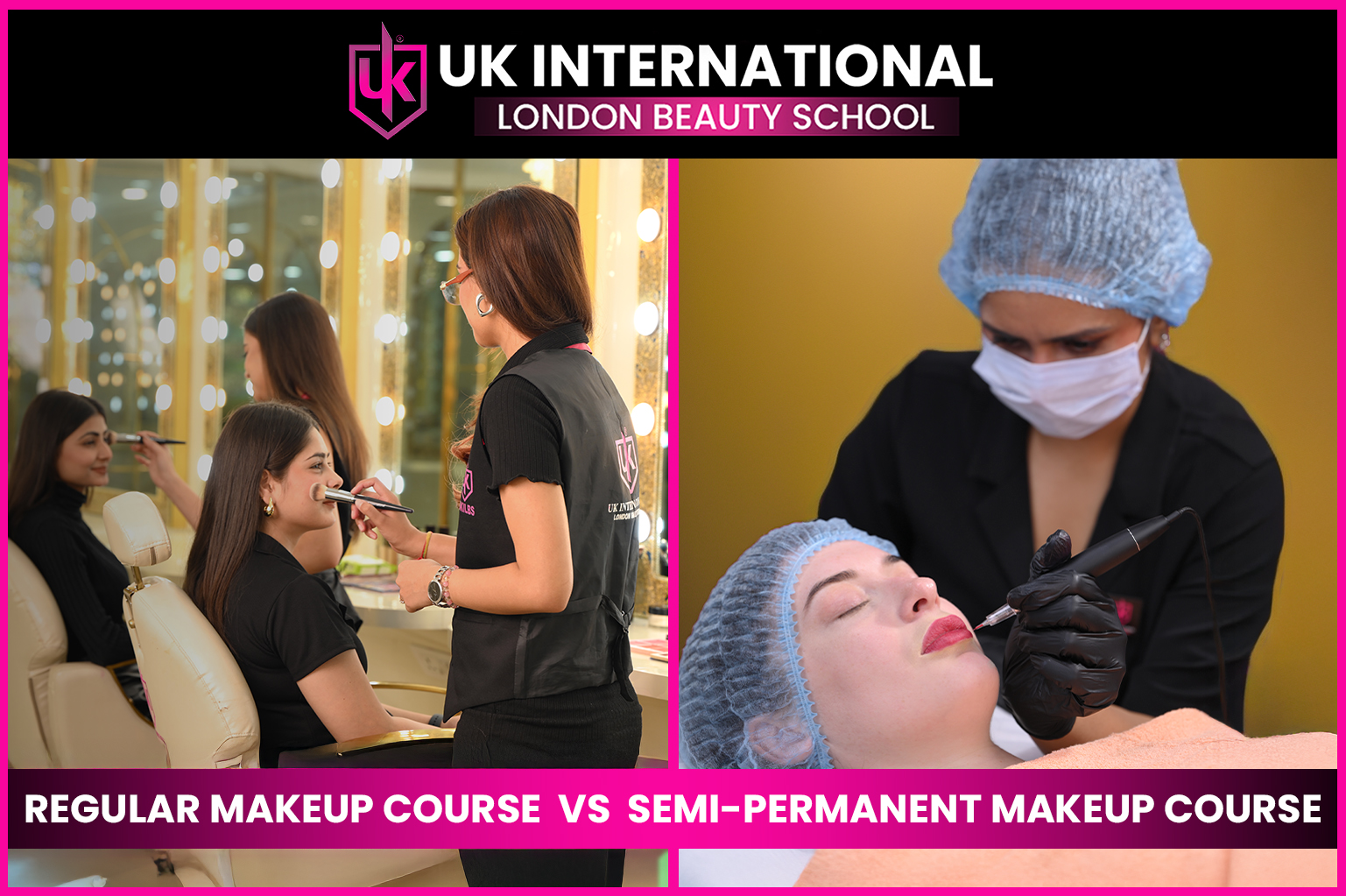
What is the Difference Between a Semi-Permanent Makeup Course and a Regular Makeup Course?
Makeup is no longer something people do for special occasions. Now it is a job that people can take seriously. There are options available in the field like wedding makeup, fashion, television, salons and even starting your own business. At the time semi-permanent makeup has opened up a special kind of job for people who want to do makeup that lasts longer.
This can be confusing for people who are just starting out. Should they take a -permanent makeup course or a regular makeup course?
The two types of courses are very different when it comes to the methods used the tools needed the training provided the safety involved and the jobs available. A regular makeup course is about making looks that last for a day using makeup products. A semi-permanent makeup course is about learning ways to make makeup that stays on the skin for longer.
Knowing the difference between the two can help you pick a course that fits with your goals, in life.
What Is a Regular Makeup Course?
A regular makeup course is something that teaches you how to do makeup looks using good quality makeup products. The makeup you put on is not permanent. You can take it off at the end of the day.
Depending on what the course includes you may learn about things like- Skin preparation
- How to apply foundation and concealer
- Colour correction
- Highlighting
- Eye makeup
- Shaping and filling eyebrows
- Lip makeup
- Doing makeup for brides
- Party makeup
- Makeup for fashion or editorial things
- Makeup, for when you take pictures or go to events
- How to pick the products
- Keeping your brushes and tools clean
- Talking to clients to understand what they want from a makeup course.
You will learn about regular makeup course and how to use the skills you get from a regular makeup course.
What Is a Semi-Permanent Makeup Course?
A semi-permanent makeup course focuses on techniques that put pigment into the skin to make effects that stay for a long time compared to regular makeup.Common areas covered by -permanent makeup training may include:
- Brow enhancement
- Powder brows
- Ombre brows
- Microblading if it is part of the lessons
- Lip blush
- Other types of cosmetic pigmentation techniques
- The specific services taught vary depending on the school and the certification.
Unlike makeup semi-permanent makeup needs a much better knowledge of skin, pigment, tools, cleaning, things to avoid meeting with clients and how to care for the skin after the procedure.
Because these treatments use tools on the skin proper professional training is very important.
Semi-Permanent Makeup vs Regular Makeup: Quick Comparison
| Factor | Regular Makeup Course | Semi-Permanent Makeup Course |
| Main purpose | Creates temporary makeup looks | Creates longer-lasting cosmetic enhancements |
| Products | Foundation, concealer, eyeshadow, lipstick, etc. | Professional pigments and specialised equipment |
| Skin penetration | No intentional pigment implantation | Involves controlled pigment placement in the skin |
| Main skills | Application and blending | Pigmentation and specialised techniques |
| Common services | Bridal, party, fashion, media makeup | Brows, lip blush and related cosmetic pigmentation |
| Training focus | Makeup artistry | Technical cosmetic pigmentation |
| Hygiene | Important | Critical |
| Aftercare | Basic makeup removal and skincare guidance | Detailed post-treatment care |
| Career direction | Makeup artist, bridal artist, freelancer | Semi-permanent makeup specialist |
| Practice requirements | High | High, with additional technical and safety considerations |
The Biggest Difference: Temporary vs Lasting Results
The simplest way to understand the difference is to think about how the result is made.
With makeup products are put on the outside of the skin. Foundation, blush, eyeshadow, eyeliner and lipstick can be taken off.
Semi-permanent makeup uses techniques where color is put into the skin to make a more lasting look. The way it looks changes slowly over time because the skin keeps changing and the color fades.
This means semi-permanent makeup is not just makeup that stays longer. It needs skills and a special way to make sure clients are safe.
What Do You Learn in a Makeup Course?
A professional makeup course usually starts with the basics. Then moves to more complicated looks.You might learn how to tell skin types get the skin ready choose the right products match foundation colors make balanced eye looks work with different face shapes and change makeup depending on what the client needs.
If you want to learn about makeup the training might also include ways to make makeup that looks good in pictures and works in different lights.
Practical experience is very important because makeup artistry depends a lot, on hand skills. Knowing which product to use is helpful. Knowing how much to use, where to put it and how to blend it in a natural way comes from practice.
What Do You Learn in a Semi-Permanent Makeup Course?
Semi-permanent makeup training tends to be more specialised.
A good course may cover:
- Skin and Facial Anatomy: Understanding skin structure and different skin conditions helps practitioners make informed decisions during treatment.
- Pigment Theory: Students need to understand colour selection, undertones, pigment behaviour and how colour choices can affect the appearance.
- Brow Mapping: For brow procedures accurate mapping is essential for creating proportionate results.
- Equipment Handling: Students learn how to use the machines, tools, needles or other equipment safely and correctly depending on the technique.
- Sanitation and Hygiene: Because semi-permanent procedures involve working on the skin, strict hygiene and infection-control practices are essential.
- Client Consultation: Practitioners need to understand the clients expectations, treatment history where relevant skin characteristics and suitability for the procedure.
- Aftercare: Clients need instructions, on how to care for the treated area during the healing period.
- Practical Training: Students should have opportunities to practise techniques under supervision rather than relying entirely on theory or demonstrations.
Which Course Is Better for Beginners?
There is no universal answer. If you are completely new to the beauty industry and want to become a makeup artist, a regular professional makeup course can provide a strong starting point. It allows you to build fundamental skills such as skin preparation, colour theory, blending, product knowledge, and client handling.
If you specifically want to specialise in cosmetic pigmentation services such as brows or lip blush, a semi-permanent makeup course may be more aligned with your goal.
Some students may eventually choose to learn both. This can create a wider skill set, allowing them to provide conventional makeup services as well as specialised semi-permanent procedures, subject to local regulations and appropriate certification.
Career Opportunities After a Regular Makeup Course
Regular makeup training can lead to a variety of career paths, including:
- Bridal makeup artist
- Freelance makeup artist
- Fashion makeup artist
- Film and television makeup artist
- Beauty salon makeup artist
- Editorial makeup artist
- Event makeup artist
- Makeup educator, after gaining sufficient experience
The freelance market can also be attractive because makeup artists can work with brides, photographers, models, influencers, event clients, and private customers.
Building a strong portfolio is often just as important as completing the course. Potential clients want to see the quality and range of your work.
Career Opportunities After a Semi-Permanent Makeup Course
A Semi-Permanent Makeup Course can lead to a specialized career path. Semi-permanent makeup is a field that requires a lot of skill and training.
You can work as a Semi- Makeup Artist or a Brow Specialist or a Lip Blush Specialist or a Cosmetic Pigmentation Practitioner or a Beauty Professional who offers specialized brow services. Many people who do -permanent makeup also offer other beauty services.
For example a Beauty Professional may offer brow enhancement along with makeup or skincare or other salon services.
This helps them offer services to their clients.
Is -Permanent Makeup More Difficult Than Regular Makeup?
Semi-permanent makeup and regular makeup are not the same. They need kinds of skills. Regular makeup needs a sense of art and attention to detail and the ability to mix colors and knowledge of products and the ability to change a look for different clients.
Semi-permanent makeup needs a sense of art too but it also needs some technical knowledge because the person doing it is working directly on the skin of the Semi-Permanent Makeup client.
You need to know about the Semi-Permanent Makeup clients skin and which pigments to use and how to make the brows look symmetrical and how to use the equipment and keep everything clean and what could go wrong and how the Semi-Permanent Makeup client will heal and what to do after the Semi-Permanent Makeup treatment and what the Semi-Permanent Makeup client expects.
So you cannot just watch a videos and think you can do Semi-Permanent Makeup.
You need to take a Semi-Permanent Makeup course and practice, under someone who is experienced in Semi-Permanent Makeup.
How to Choose Between the Two Courses
Before you pick a course think about what kind of professional you want to be.
You should think about what you want to do.
Choose a regular makeup course if:
- You like making people look different with makeup.
- You want to work with brides or do fashion makeup.
- You want to be your boss and do makeup for people on your own.
- You like trying out colours and styles.
- You want to work in a salon or a studio or at events or in the media.
Choose a -permanent makeup course if:
- You want to specialise in making peoples eyebrows or lips look better.
- You like doing work that needs a lot of attention to detail.
- You are interested in making people look good for a time.
- You want to offer people a kind of beauty service.
- You are okay with following the rules to keep people safe and clean.
Consider both if:
- You want to have a career in beauty and eventually do both regular makeup and special makeup that lasts longer.
- This way you can offer people services and be good at many things.
- The makeup courses are good for people who want to do things.
- You can choose the makeup course or the semi-permanent makeup course or you can do both.
- You should think about what you want to do and choose the course that's right, for you.
- The regular makeup course and the semi-permanent makeup course are both choices.
- You should pick the one that makes you happy and helps you become the professional you want to be.
Final Thoughts
The decision between a -permanent makeup course and a regular makeup course really comes down to what you want to do with your career.If you want to learn how to do temporary makeup for people who are getting married or for people who need makeup for special events or for people who work in fashion or for people who work in the media or for people who just need makeup done sometimes then a regular makeup course is the way to go. This kind of course will help you get really good at doing makeup it will teach you about the products you need to use. It will show you how to apply them.
Semi-permanent makeup training is different. This is for people who want to learn how to do makeup that lasts a time like making eyebrows look good or making lips look pretty. Semi-permanent makeup training is harder because you need to know a lot of things you need to be very precise you need to keep everything clean and you need to be good with the people you are working with.
If you are not sure what you want to do think about what you want to achieve in your career. Do you want to be a makeup artist or do you want to specialise in -permanent makeup, like cosmetic pigmentation?
When you know what you want to do it is much easier to find the course to take.
Frequently Asked Questions (FAQs)
No. Regular makeup is applied temporarily to the surface of the skin, while semi-permanent makeup involves specialised techniques for placing cosmetic pigment into the skin to create longer-lasting results.
A regular makeup course can be a good starting point for someone who wants to become a makeup artist. If your specific goal is to specialise in brows or lip blush, semi-permanent makeup training may be more appropriate.
Yes. A makeup artist can develop additional skills through specialised semi-permanent makeup training. However, they should complete proper training rather than assume conventional makeup experience is sufficient.
Results vary depending on the technique, pigments used, skin characteristics, lifestyle, and aftercare. Semi-permanent makeup gradually fades rather than remaining identical permanently.
This depends on the course, your practical competency, certification requirements, insurance, local regulations, and the specific treatment you intend to provide. Always check the applicable requirements before offering services professionally.
A certificate can demonstrate that you completed training, but professional success also depends on practical ability, portfolio quality, client service, hygiene, experience and continued skill development.
.webp)
.webp)
.webp)